"The studio was a separate building on the side of the residence, a good sized area (approximately 50' by 20') that originally been a coach house but in more recent years had been used as a squash court; a balcony overhead was converted into a smallish control room. The multitrack machine was a 16-track Ampex MM1000 and the main 2-track was an old tube Ampex Model 300; varispeed was provided by a monstrous contraption called The Savage, recently purchased from Pye Studios.
Paired with these was a 20 x 16 mixing console made by an obscure company called Walsall Timing Developments (later Rebis / Audio Developments). Virgin Technical Director Philip Newell (who started at The Manor several months after it opened) quickly found out that the mixing console was totally unsuitable for the task at hand. "The desk had a very inflexible way of working," he says. "It was basically a PA desk, and it wasn't easy to do overdubs or many of the other things that were absolutely necessary [to make records in that era]".
(an extract with the kind permission of Howard Massey from his excellent book "The Great British Recording Studios")
The Manor Studios, Shipton-on-Cherwell, opened in 1971
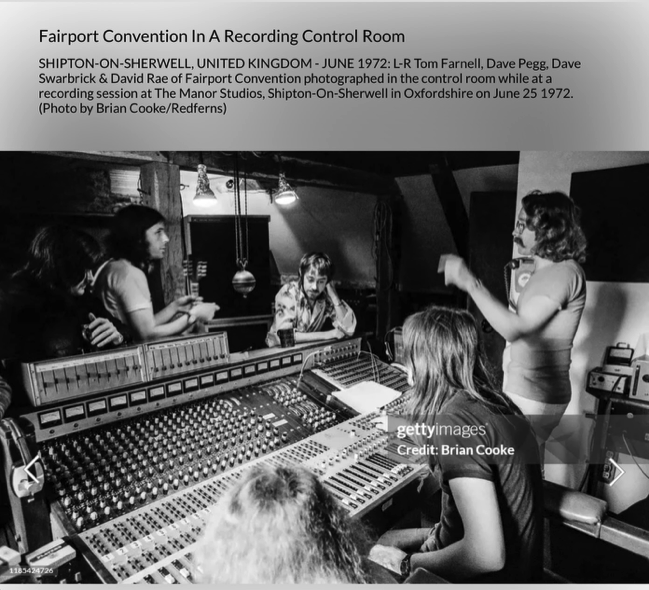
Despite the limitation of the console, it went on to record the first couple of dozen releases for the new Virgin Records label as well as other recordings.
Date Artist Album Virgin Catalogue Number
1971 The Bonzo Dog Band Lets Make Up and Be Friendly (First band to use the studio)
1971 Dec. The Bunch Rock On
1972 Jan Dave Cousins Two Weeks Last Summer ("Second 'proper' session at The Manor")
1972 Sandy Denny Sandy
1972 Dick Heckstall Smith A Story Ended
1972 March King Earl Boogie Band Trouble at Mill
1972 Vinegar Joe Rock 'n Roll Gypsies
1972 Mick Softley Any Mother Doesn't Grumble (mixed at The Manor)
1972 John Cale The Academy in Peril
1972-1973 Magma Mekanik Destruktiw Kommandoh
1972-1973 Gong Flying Teapot V2002
1972-1973 Mike Oldfield Tubular Bells V2001
1973 Steve York's Camelo Pardalis Manor Live V2003
1973 Badfinger Ass (some tracks)
1973 Riff Raff Riff Raff
1973 C.C.C. Inc Castle in Spain
1973 Supersister Iskander
1973 Strawbs Bursting at the Seams
1973 Vivian Stanshall Men Opening Umbrellas Ahead
1973 If Double Diamond
1973 May Henry Cow Legend V2005
1973 June Faust Faust IV V2004
1973 July McKendree Spring Spring Suite
1973 The Buddy Miles Band Chapter VII
1973 Edgar Broughten Band Oora (some tracks)
1973 Scaffold Fresh Liver (some tracks)
1973 Gong Angel's Egg (mixed at The Manor) V2007
1973 Oct. Claire Hamill October
1973 Colin Scot Just Another Clown
1973 Horslips The Táin
1973 Hookfoot Communication
1973 Kevin Coyne Marjory Razorblade VD2501 (?)
1973 Snafu Snafu
1973 Link Wray Beans and Fatback V2006
1973 Dec. Tangerine Dream Phaedra V2010
1974 Hatfield and the North Hatfield and the North V2008
1974 Michel Zach Le Vol D'Icare
1974 Chili Charles Busy Corner V2009
1974 Kevin Coyne Blame it on the Night V2012
1974 Mike Oldfield Hergest Ridge V2013
1974 Ivor Cutler Dandruff V2021
1974 Robert Wyatt Rock Bottom (mixed at The Manor) V2017
1974 Gong You V2019
1974 Dudu Pukwana & Spear In the Township
1974 B.B. Seaton Dancing Shoes (overdubs)
1974 The Raymond Froggat Band Rogues and Thieves
1974 Feb.-Mar. Henry Cow Unrest V2011
1974 July-Sept. Strawbs Ghosts
1974 Del Richardson Pieces of a Jigsaw
1974 Elf Carolina County Ball
1974 Comus To Keep From Crying
1974 Slapp Happy Slapp Happy V2014
1974 David Bedford Star's End (mixed at The Manor) V2020
1975 Jan. Tangerine Dream Rubycon V2025
1975 Mike Oldfield Orchestral Tubular Bells (mixed at The Manor) V2026
1975 Slapp Happy / Henry Cow Desperate Straights V2024
1975 Tom Newman Fine Old Tom V2022
1975 Slapp Happy / Henry Cow In Praise of Learning
1975 Supercharge Local Lads Made Good
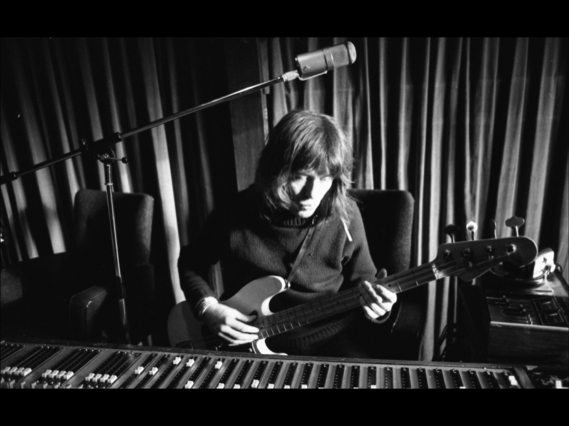
Tom Newman at work
Photo by Simon Heyworth
Reply from Tom:
"When I first ordered the mixer i was a bumbling know nowt, and Phil Newell came just in time to point out that there was NO monitor section for the group outputs! ( This about a month before we were due to open !) So he specified an add on bit that AD rushed to get to us - that would explain the glue prob? Phil will explain all . . . "
Reply from Phil:
"Yes; I now see that Tom's recollections seem to coincide well with mine. There could have been a stick-on panel, and probably (almost certainly) an A/B switch somewhere, to change the 16-track monitoring from group out to tape out.
I believe that for stereo mixing, we simply used groups 1 and 2."
Philip Newell has kindly pointed out a couple of errors and omissions:
"I actually started working there in early October 1971, a month before it opened, as is explained in the autobiographies of both Tom and myself. And in the quote from Tom at the bottom of your page, Tom actually says, 'Phil Newell came just in time to point out that there was NO monitor section for the group outputs!' Indeed; about a month before opening."
"Audio Developments was a subsidiary/sister-company of Walsall Timing Developments, set up specifically for the manufacture of (previously) portable mixing consoles for outside work. Rebis was only associated via the fact that it was two ex-AD employees (Dave and Don) who set up Rebis Audio, but they obviously were influenced by their work at AD. Two other AD employees had previously left to go to work for Virgin as technical/recording engineers, Phil Becque to The Manor and Steve Cox to The Manor Mobile."
Mis-spelling of Cherwell in the Getty Images picture
Both Tom and Philip have published autobiographies that have more details about the technical aspects of The Manor:
Fine Old Tales: Tom Newman Autobiography
Gaining My Virginity: Philip Newell Autobiography

Simon Heyworth
Supersister sessions 1973
Philip Newell has also supplied me with more history of recordings:
Anyhow, regarding the recording using that console, 'Summer is Fading', on Jim Capaldi's Whale Meat Again album was definitely recorded on the AD console during Viv Stanshall's sessions for his Men Opening Umbrellas Ahead album -- on which Jim was playing. If you look up Whale Meat Again on Discogs, you will see in the credits that the musicians listed for 'Summer is Fading' are different from those playing on all the other songs. That is because they were the musicians playing in Viv's band for his own album. I know this because I was the recording engineer, and the full story of how it came about is in my autobiography.
Bruce Botnick was at The Manor in 1972 to record The Mark Almond Band's album, Rising.
Medicine Head recorded at The Manor during the Thru' a Five album sessions, with George Ford on bass (the half brother of Emile Ford).
The African drums for Ommadawn were also probably recorded on the AD console, just before the studio was rebuilt. The studio didn't reopen until early August, and I saw the sleeves in September, well before we mixed the album.